

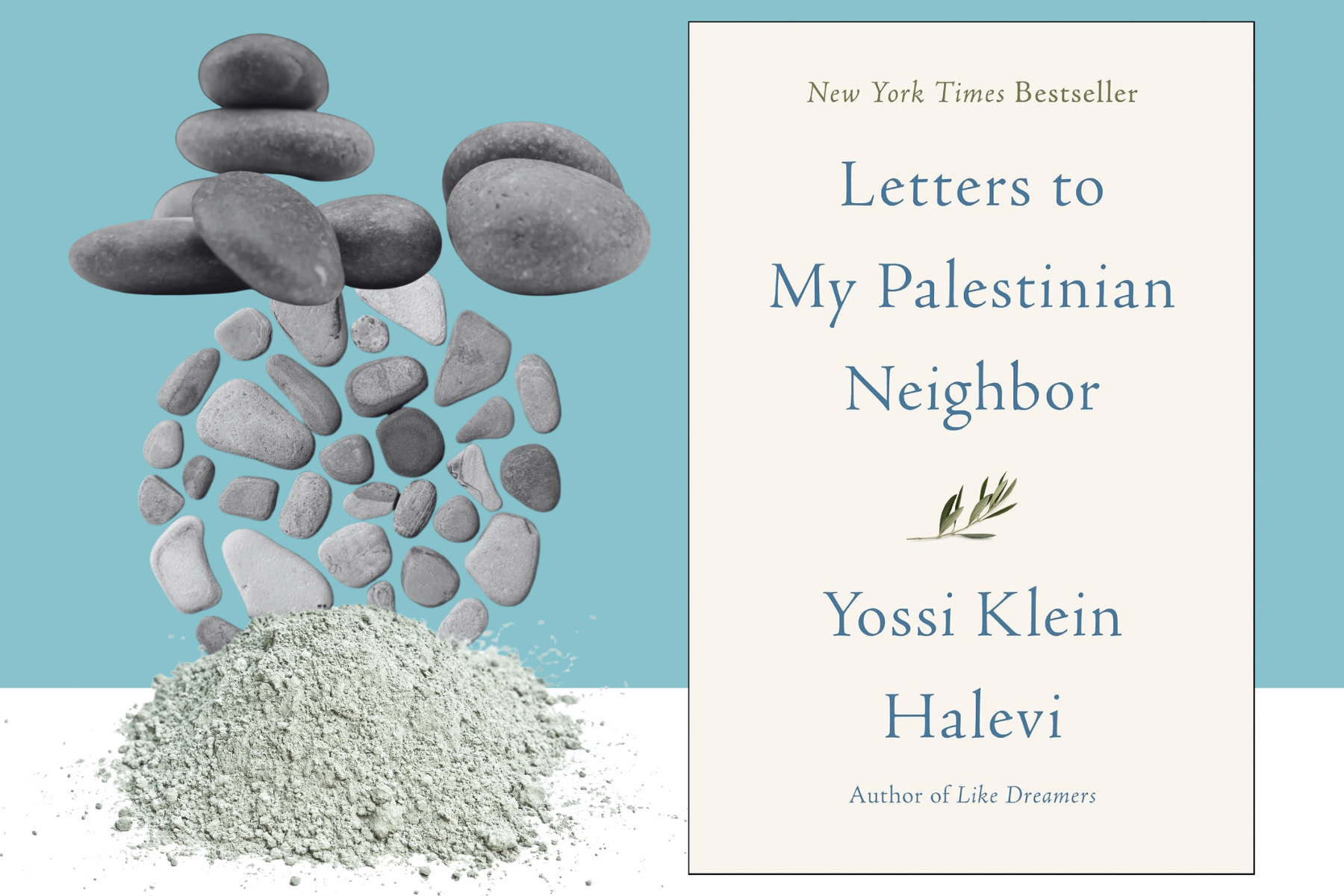
I recently began a second read of my friend the scholar and best-selling author Yossi Klein Halevi’s surprisingly emotional book, Letters to My Palestinian Neighbor. Published in 2018, it had for some a courageous bent; for others, I suspect, something closer to delusion. The Second Intifada of the early 2000s was still recent history, still the event that all but extinguished the flame held by the Israeli left for an equitable settlement. A dreamed-of agreement that, if successful, would allow hemmed-in Israelis, aching to bring their skills beyond the borders of an area no bigger than New Jersey, to do just that.
I had friends—musicians, educators, and karate experts—who spoke of their longing to travel from any point in Israel up through Lebanon and Syria, into Turkey, then into Eastern Europe across the Bosphorus, through Europe, and finally through the Chunnel all the way to England. I could see hope, in all its brightness and innocence, reflected in their faces. None of it was to be. The dream they held fast to was let go of as if it were the handle of a red-hot skillet. Bus bombings, suicide bombers in pizza shops, teenagers dancing at a discotheque in Tel Aviv, blown apart. A father and his daughter murdered in the Café Hillel bombing in Jerusalem on the eve of her wedding. Instead of greeting the bride, wedding guests shoveled dirt on her grave and her father’s.
The sounds, the sights, the smells, seared into memory, rendered any bridge to peace impassable.
Letters to My Palestinian Neighbor dared to suggest the resurrection of even a momentary thought of bridge repair. It asked, in the most longing, the most sensitive terms, for Palestinians to merely listen to the story of Israeli Jews, to allow in a glimmer of understanding of why there is a separation barrier, why there are checkpoints, why it became necessary to prevent the easy passage of anyone who thought it a religious duty to savagely murder Israeli children. Yossi’s book now reads like ancient history. But like all history, it remains important, perhaps more now than when it was published.
The pogrom of October 7, 2023, helped make it so.
Many of my non-Jewish acquaintances, and a handful of Jews, cite the unwillingness of Israelis to relinquish their weapons, to beat their swords into plowshares. What they fail to comprehend is that all swords must be reimagined, not just those of one side. “Why is Israel always at war?” they ask. “When did they become so bloodthirsty?” I’ve been asked all this myself, and more pointedly: “What’s gotten into you, Peter?”
What’s gotten into me is this: no one, no one sane, would allow proven enemies as near as a kilometer or two from their homes to rape and murder their children. No one moral would tolerate the presence, near their homes, of people who have proven themselves able killers, and who repeat again and again that they will kill again and again. True, the bridge is no more. So where does the person who understands that peace does not come from fantasies about the motives of sworn enemies begin? With the stones of that obliterated bridge? Its pebbles, its dust?
I want very much to speak as Yossi has, but to my own neighbors rather than his. They seem not to comprehend, or not to be interested in comprehending, the story not just of Israelis, but of Jews like me who staunchly support Israel. And here I must sadly point out, for the umpteenth time, that my support of Israel has nothing to do with any particular government or policy. Rather, it has to do with the people, the Jewish people to whom I belong. Granted, the story is nearly impossible to grasp for those who have never known danger, never known what it’s like to have had friends and family murdered, not only in a war (although that matters greatly) but murdered in cold blood—blown to bits. Their “bits,” however minuscule, collected by specially trained teams for burial.
I speak to those who would not hesitate for even a second to dial 911 if danger arose on their doorsteps, certain that someone would come to defend them and their loved ones, using deadly force if necessary. I’ve heard their questions, detected the bile in them. “Why is Israel so warlike, so prone to violence? Can’t they just treat everyone with respect? Can’t the Jews learn to get along?” Were this happening to you—to your spouses, your mothers, your fathers, your brothers, sisters, sons, and daughters—I suspect the blood you’d be willing to shed would be incalculable. You just don’t know our story.
During three consecutive summers of the Second Intifada, my wife and I took our young children to stay in Jerusalem, three of them at first, and later a fourth, an infant. We were there when buses were exploding. We felt fear. We felt the fear of others. During that time I went with my friend, the renowned Israeli singer and guitarist David Broza, to visit a “neighbor” of his, in Yossi’s parlance. This neighbor, let’s call him Samir, owned a small recording studio in East Jerusalem. For context, David, like Yossi at the time, was devoted to bridge-building between Jewish Israelis and Palestinians. Aside from performing the world over and recording his music, this was his raison d’être.
Samir was warm and welcoming. I remember his teenage daughter brought us cardamom-spiced coffee and cookies as we sat and listened to some recordings he’d recently made. He read us a poem by the Palestinian poet Mahmoud Darwish describing the loss of his grandfather’s land and his olive groves. I found it moving and beautiful in its simplicity. At some point I asked Samir if there were any David Brozas on the Palestinian side, someone as eager as David was to listen and learn about the Jewish story, to hear the poems of Yehuda Amichai, to discuss bridge-building as David had been doing publicly and for years. I don’t believe I’ll ever forget either Samir’s expression or his words, delivered as if to throw a boulder in the road of the conversation I was eager to have: “This is not the time for such things while bombs are dropping on our people.”
I didn’t say the following; my place was to listen, not to rebut, to learn, not to teach. But my thoughts were coming in screams: What in the world are you talking about? The bombs are “dropping” on buses taking third-graders to school, on brides-to-be sitting with their fathers on the eve of their weddings, on people eating pizza, at bus stops, at a hotel where Shoah survivors were celebrating Passover!
Clearly, Samir didn’t think I knew his story either.
I won’t claim that I could have foreseen what is happening now, in the autumn of 2026. Who could have anticipated the ways and means by which the bridge dissolved into dust? The ways and means by which much of the world has turned against Jews and the Jewish state? Still, I took something away from my time with Samir in that cramped recording studio somewhere in East Jerusalem. Among the myriad experiences I have had since then, I have not forgotten the Darwish poem. I have not forgotten the cookies, not forgotten the music, and I will never forget the words spoken by Samir and the impression they left me with. It was this: the path forward was not knowable, and scarcely imaginable. Today this remains just as true.
About a quarter century has passed since I sat with David and Samir.
In the ruins of the Bibas family home in Kibbutz Nir Oz, not quite a year ago, I stood on the stones, the pebbles, and the dust of that devastated bridge. And because I am either an optimist or a fool, I have never once spent a day without racking my brain over its reconstruction. But is this not the nature of the difficult, the unreasonable choices providence forces us to make? Is this not the way of prayer? Is this not the way of wide and distant horizons, unreachable yet still reached for? Of peace unobtainable but still desperately desired?
Just after my dad died, way back in the fall of 1983, I remember thinking that the difference between a candle barely flickering at its wick and one completely extinguished is categorical.
One is alive. The other, gone forever. This idea continues to play in my mind.
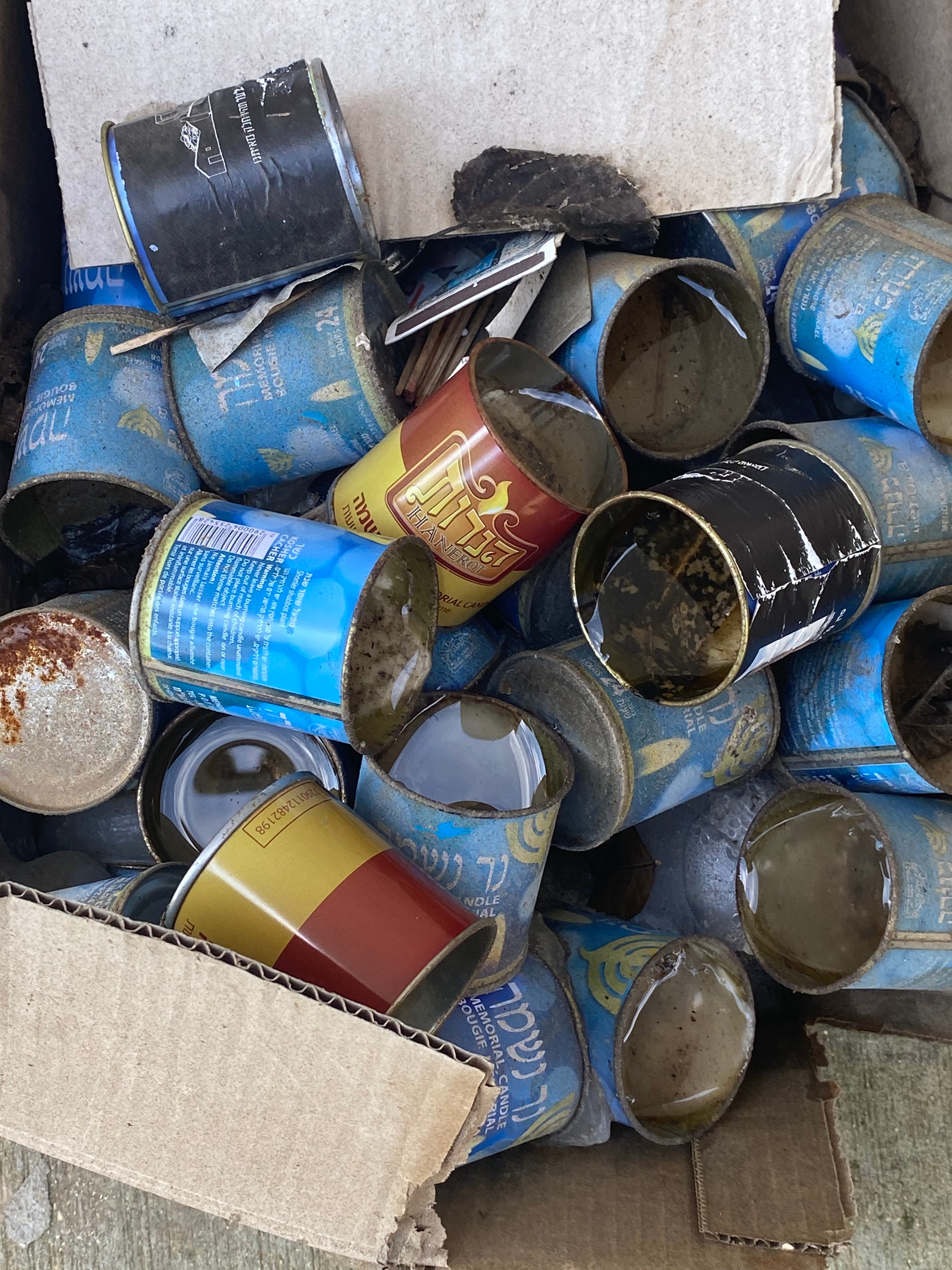
I’ve read Letters to my Palestinian Neighbor. We’re going on a 12 hour dual narrative tour Monday in the Gaza Envelope led by an Israeli Jew and a Muslim Palestinian, best friends and business partners. I’ve held space for hope.
Today that changed when my husband and I were eating lunch in a restaurant in Yafo. During every day we’ve been here in Israel and during two very long walks today, I marveled at how unknowing the media and the broader public are by throwing around words like apartheid and genocide to describe Israel. Really, in a country where every road sign is written in Hebrew, English and Arabic? Where Jewish settlers are convicted of violence against their Palestinian neighbors? Where Arabs have a coalition in government? During all of my walking and our driving around Jerusalem, Akko, Haifa and Tel Aviv, at a museum, a university, a library, in shopping malls, shoeks and restaurants I’ve seen more and heard more people of more various backgrounds: Muslim, every degree of Jewish, Christian, Baha’i, French - lots of French, German, British, Hebrew, American, Spanish, South African, Philippines, languages and countries of origin I can’t identify, every shade of skin, and so many others that I can’t help but laugh and cry at those who lie about Jews and Israel. All these diverse people were enjoying or working here, benefitting from all that Israel offers. But still we are cursed at.
At the Nova Festival memorial site and at the Kibbutz Be’eri cemetery one group of observers wasn’t present: Muslims. Yes, Israeli security now keeps them out but remember they also celebrated the massacre over which we still grieve.
My mood changed today, any flicker of hope dissolved that I could return to Long Beach, CA and help people better understand Jews and Israel, when three men were seated right next to us, at that Middle Eastern restaurant today where there were no female employees. One of those men had a swastika inked on the meaty part of his hand beneath the V formed by his thumb and forefinger. He held his hand to the left side of his face in my line of sight (intentionally?) and I saw the tattoo very clearly. I aimed my phone camera toward my husband and captured the image of hate. I took that moment as a bad omen that has robbed me of hope. As our Israeli cousin who has lived all over the world warned us: “They all hate us.” As a liberal Californian of a certain age, I resent that 100 years later Never Again has proven to be yet another lie.
Actually some of us did understand that those thoughts of peace were delusional.
I spoke about that with Yossi whom I regarded as a friend. At least he tore his clothes - kriya- in grief on the day of the expulsion from Gush Katif and didn’t celebrate as so many did.
But to say that no one anticipated what has happened is just not true.
We were categorized as warmongers and shunted aside.
It could have been so different had those of us who understood the Arab mindset and didn’t project western thinking onto them been respected just a bit more.
Arabs told me decades ago that the left were their useful idiots.
And now some have doubled down.