
Mourning, Memory and Krump Dancing: Reflections On The Holiday of Tisha B’Av
(Essay)

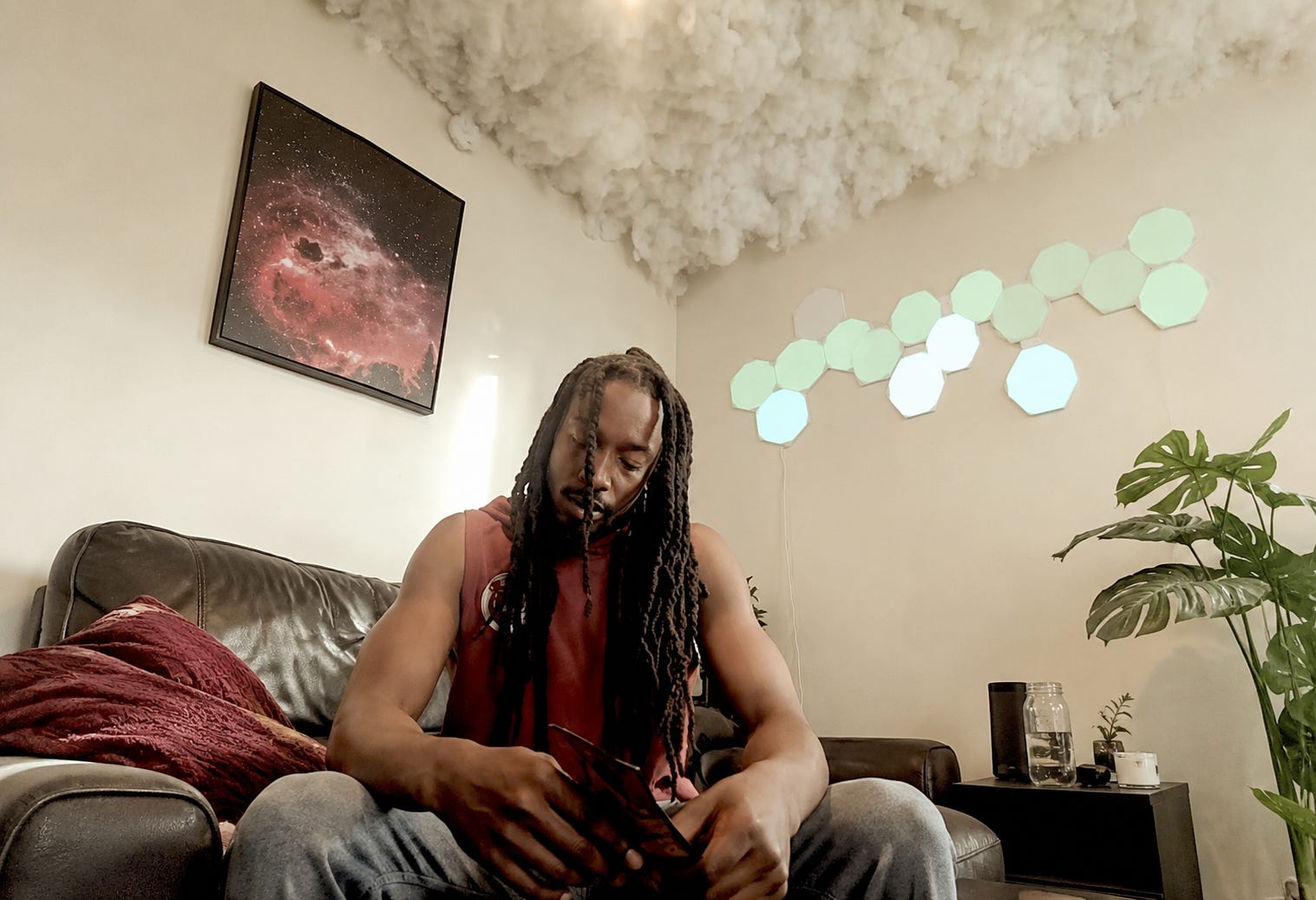
Krump dancer Lucky B.
Sometimes I think, why am I here? I mean, in America. In LA.
My parents raised me in Minneapolis. I moved here from New York, got married, and stuck around. My grandparents came from Tulcea in eastern Romania and from what was then called Yekaterinoslav, Ukraine. And before that, a cousin once told me, we were from Spain— on my dad’s side—and fled east to escape the Inquisition.
At some point, everyone of us had roots in Israel, until we were forced into exile. This is the day when that exile began. It’s a holiday called Tisha B’Av, on which Jews are supposed to remember both the destruction of the First Temple by the Babylonians under Nebuchadnezzar in 586 BCE and, nearly six and a half centuries later, the destruction of the Second Temple by the Romans under Titus in 70 CE.
These were different empires, different centuries, but all were said to happen on the same date on the Jewish calendar. That’s when we packed our bags, along with our language, our prayers, our traditions, and our memories, and set out into a world that was rarely kind.
But that’s not the deeper loss.
Our sages taught that the Temple was more than cedar wood, and gold, and stone. At its heart was the Holy of Holies, the place where the Ark of the Covenant was kept, and where the Divine Presence was most palpably encountered. It was thought to be the portal between the spiritual world and the physical world. When the Temple was destroyed that portal was lost. Even more than exile itself, this loss lies at the center of Jewish mourning.
Exile brought its own collection of horrible suffering — the Inquisition, expulsions, pogroms, blood libels, the Holocaust, and, leading right up to the present, the atrocities of October 7. But this was not only the Jews’ loss. The “God of Israel” is understood to be the Creator of the entire world, of every human being, of everything imaginable and unimaginable. If a meeting place between heaven and earth went missing then something of inexplicable significance vanished for everyone.
Ever since, Jews have faced Jerusalem in prayer, ended weddings by breaking a glass, left a small section of a new home unfinished, and concluded every Passover Seder with the words, “Next year in Jerusalem.” These are not merely expressions of national longing. They are reminders that something essential remains unfinished in the world itself. Memory is a kind of intellectual and emotional lifeblood.
Yesterday I took an Uber to an endodontist, to deal with a tooth and gum problem caused by braces that were supposed to straighten my teeth back in eighth grade. Orthodontia was primitive back in the 70’s. Sort of like Flintstone dentistry.
My driver’s name was Lucky B.
He was a man in his mid-thirties, handsome, with long braids draped over one shoulder and down his back. His face was lean and sculpted. He looked like an artist. What surprised me most, though, was the music. Instead of hip-hop or rock, he was listening to some scratchy old blues. A dobro played with a slide, shuffled across the speakers.
“You don’t look like an actuary,” I said. “Are you a musician?”
“No,” he laughed. “I’m a dancer.”
Lucky is a Krump dancer. He explained that Krump grew out of something called Clown Dancing, created in Los Angeles by a performer who originally entertained children at birthday parties. Krump, he said, is looser and freer than hip-hop. “It’s got structure, but leaves lots of room for improvisation.”
“You can tell a dancer’s personality by the way they move,” he said. “You can tell who’s shy and who’s outgoing.”
I asked him to play me some Krump music. He fiddled around on his phone until he found something worthy of playing for me.
The rhythms were like hip-hop, but they were weirder, more messed up. The beat seemed to stumble without ever falling apart. The kick drum kept landing where I wasn’t expecting it. The snare hits were unpredictable. It sounded, to me, like music full of tension, full of uncertainty, and full of dark beauty, especially when that monstrous bass churned beneath it all. It felt like music made for someone trying to break free — not just from society’s expectations or conventions, but from an invisible weight that threatens to reduce a person to dull routine and tired habit.
Then, Lucky said something that clicked with me.
“I’m not really religious,” he said. “And not to sound strange, but when I’m dancing, I feel like I’m connected to something higher than myself. Like I’m tapping into a higher source.”
There it was. Just a human being describing a beautiful experience.
On Tisha B’Av we fast for twenty-five hours. We don’t eat or drink. We don’t wear leather shoes. We refrain from marital intimacy. We mourn. To mourn is to remember what was lost — exile, persecution, the destruction of Jerusalem, and the loss of that meeting place between heaven and earth, the disappearance of a place where something eternal seemed to break into ordinary life.
Many people will understandably say they don’t believe any of that, that religion has caused too much suffering. Fair enough — I wouldn’t presume to argue about something that cannot be proved empirically. But still, I wonder why people from every culture, every era, and every belief system continue to describe moments like the one Lucky described, when music, love, beauty, birth, grief, or dance suddenly make them feel something larger than themselves. My guess is that they’re reaching toward something that feels like home.
We mourn to remember. We remember to awaken something within ourselves that modern life constantly tells us to forget — that we are more than consumers, more than political creatures, more than algorithms, more than productivity, more than distraction. That love matters. That family matters. That belonging matters. That transcendence, whether we can explain it or not, still calls out to us.
Lucky B. probably didn’t know he was talking about Tisha B’Av. But in his own way, I think that maybe he was.
When we are touched by art, music, speech, dance, etc., that is our gateway to the ineffable divine Source. It is out of body, or sometimes evoking a frisson through the entire body. You know the mysticism of creating and playing music. I know the mysticism of being an audience for it.
Thank you for this . That point of connection between Heaven and Earth and how doing creativity and receiving it can give us glimpses beyond the sorrow . I think of Leonard Cohen’s - I greet you from the other side / of sorrow and despair …