
Almost Too Much Wonder
(Personal Narrative)

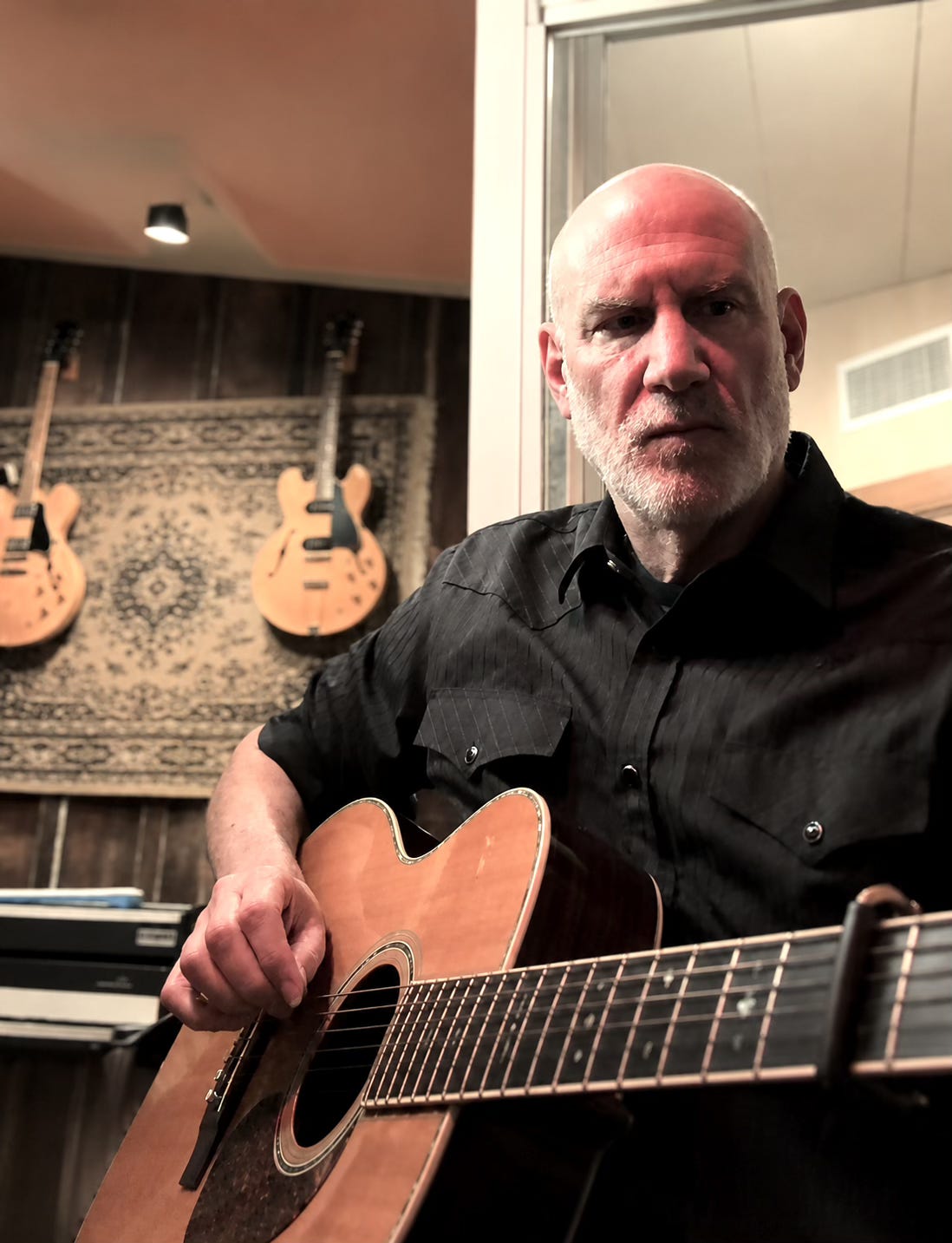
We’d just finished the mix of a new song. Sitting between the speakers, listening to the crescendo at the song’s end, the drums and bass, the chiming guitars, the newly added background vocals, I became unexpectedly emotional. I’m not entirely sure what came over me. Perhaps it was because the song itself stemmed from an unusual and unusually emotional experience which began on the trip my wife and I took to Israel last December.
I left the control room and there was Jim in the studio, my old friend, among my best. He was speaking to someone on the phone. When he saw the condition I appeared to be in, he abruptly finished the call. Though we’ve been friends for more than half a century, I must have looked unusual because he immediately asked if something was wrong.
It was hard to speak. I was beginning to tear up and, strangely, laughing too.
“Are you okay?” he asked. “Did something happen?”
“No,” I said. “Not at all.”
“Then what’s wrong?”
“Wonderment,” I said. “The wonder of things. I’m not sad. Not at all. I’m feeling everything.”
For the moment the boundary between me and the world, between memory and imagination, between my past and the possible futures before me, had dissolved. Music is like that. Even one’s own. Especially one’s own, when it derives from a similarly boundary-less place.
Though in dreams I still appear with dark hair and youthful skin, I should add that I am old now. I am sixty-six, and the gifts of this are many. One is that the walls impeding human connection become less fixed. The knowledge that time is indeed fleeting becomes an invitation: to love more, to notice more, to become more present within one’s own experience of life.
My belief is that men, in particular, have misunderstood something of their natures. We have been acculturated to appear “manly,” to take on a false image, a caricature of manliness. In fact, according to mystical Jewish teachings, man’s essential nature is chesed — which denotes nurturance, tenderness, bestowal, and deep forms of kindness. A woman’s nature is gevurah — which denotes protection, ferocity, and forbearance. One might think a man who expresses his chesed is weak. That would be wrong. At the heart of every kind of strength, brute or otherwise, there must remain tenderness and a willingness to give.
Leaving the control room, I felt so many things that my ability to articulate them, along with my need to do so, was such that I had shifted, as we all do at certain moments when words become insufficient, to the most primitive form of expression: tears.
Had I not been suffused with horror and grief, had I not become consumed with the suffering of strangers and those closest to me alike — with thoughts of my children and grandchildren, my wife, my mother, my siblings, one of whom died in an automobile accident on her way home from visitor’s day at her child’s summer camp, and my father, a hero to me, who died the day after I turned twenty-four — had I not thought endlessly about exile, about God, God who must be so weary and frustrated that the pinnacle of His creation cannot seem to choose life over death and who, in order to allow for free will, painfully restrains Himself from intervening; had I not made myself sick from looking, even lightly, into reports cataloguing humiliations, degradations, and brutalities beyond ordinary comprehension; had I not been thinking of all this and more, perhaps words would have sufficed.
But they did not. Because there comes a point when language, for all its beauty and utility, can no longer bear the weight of things.
What I was feeling had not come from sadness exactly. Nor despair. From grief perhaps. From gratitude. From having lived long enough to know that every sorrow appears connected to every other sorrow—possibly every joy as well.
Last December, my wife and I returned to Israel for the first time since October 7. I went because I love the people and I love the land. I wanted to perform. I wanted to visit the kibbutzim where the atrocities had taken place. I wanted to see. To know. To feel.
It’s fair to say I had become obsessed with Kfir and Ariel Bibas, the two red-headed boys from Kibbutz Nir Oz who had been kidnapped and soon afterwards murdered by their captors.
With a small group, Maria and I entered what had once been their home. As the others drifted outside, I remained.
I saw charred walls.
Some of the children’s toys.
The destruction of a family.
The gouging out of humanity itself.
And because this too belonged to the category of things for which words are insufficient, I stood there and wept. My time of weeping was not brief.
The next day Maria and I were back in Jerusalem in a cold apartment preparing for Shabbat. Less than an hour remained. I checked messages, emails, Facebook Messenger. There was a note from someone I didn’t know.
In part, it read:
“Our daughter Ora passed away two years ago from an extremely rare cancer. She was thirty-eight and left behind six young children. Although her suffering was terrible, we saw the blessing and kindness of Hashem through the darkness. She was able to say farewell to each of her children.”
I called the man.
Of course I did. That’s what chesed demands.
His name was Chaim. We have remained close.
In one of our recent conversations he shared a teaching from an old Jewish text. I’ve forgotten the author. The question posed was this: How can a person be revived from the dead if he has been consumed by a lion or destroyed by fire?
The answer: Simple. The body decays and turns into air.
Turns into air. I found this astonishing.
Then came something about manna, the heavenly bread, and dew — how it appears not from clouds but from the air itself. I didn’t understand it, not entirely. But perhaps understanding is overrated. Like a child, I may have apprehended the truth of it before comprehending it.
I told Chaim I had to end the call. I needed to write.
Sometimes a song feels complete even though it has not yet begun.
This was one of those songs.
…I have seen the world in its infancy
I have seen it in its shame
I don’t walk among the innocent
I hold a full share of the blame
Is there time enough, I ask you
Time enough to make things right
To struggle through the darkness
Let in a single shaft of light
All of it is turning
The heavens and the Earth
Everything’s in the balance now
Both the cost and the worth
Oh let it come
Let it come and fall around us
Oh let it come
Let it rain down and astound us
Let’s taste the bread of angels
Speak the prayers of the living and the dead
Come taste the bread of angels
As we lie upon your bed
May we be blessed with peace in this time of turning, in this time of distortion and dissembling. May what appears as destruction prove instead the first stage of rebuilding, a restoration of the brokenness of humanity.
May we be blessed to pray for such things.
Ha! It’s cool to watch you mightily try to stay human in all this. You describe overwhelm well. You don’t look 66. Something you said reminds me of George Harrison saying “it’s all too much.” But it’s really rich what you’re doing. You seem to let yourself bear witness to pain and love and then carry it like a mighty camel carries thru a desert provisions for an entire town. I usually rankle at self blame. (I’m a Spinozaic Jew, I don’t do blame.) But seeing you take your “full share” sets an example of humility. It’s not vanity in your case. You know that we’ll all have to do that a little if this is going to work out in the end. The love gushes forth in copious amounts and some of it is collected into a song that is itself a bit like manna. And the overflow collects into a blog post, a video, a painting, a…
Shabbat shalom Mr. P.
I like that word “astound”
I was born on October 7, 1966. So October 7 has taken on much larger meaning now. Epic meaning. This world often makes me tremble with fear. But it also makes me tremble at all the beauty. Thank you, Peter, for creating beauty in this fearsome world.